
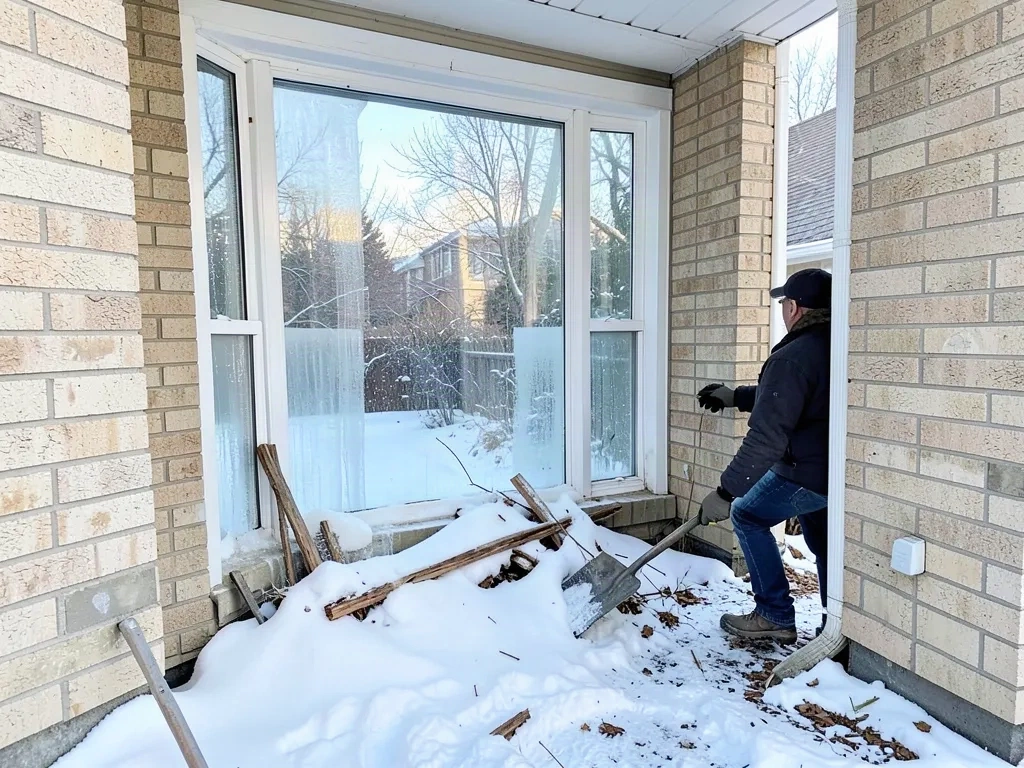
With Toronto's freeze-thaw cycles, window well winter maintenance comes down to three jobs: keep snow and ice out of the well, make sure the drain line is clear before deep freeze hits, and confirm the cover is sealed and undamaged. Skip any of those and a single January thaw can send meltwater through the well and into your basement — or trap moisture against the egress window until the seals fail and the frame rots.
Why Toronto Winters Destroy Unmaintained Window Wells
A window well is not decorative. It's a structural system: the well holds back soil, the gravel base moves water to a drain line, and the cover keeps debris and precipitation out. The GTA gets more freeze-thaw cycles than most of Ontario — daytime thaws followed by overnight freezes happen dozens of times between December and March. Every one of those cycles does two things:
- Expands and contracts the soil around the well, which can heave the well itself and pull it away from the foundation wall.
- Turns meltwater into ice that blocks the drain and pushes water into the weep holes, the window frame, or up over the edge of the well.
That's the mechanism behind most leaky basement window calls in this city. It's usually not a foundation failure. It's a blocked drain and a gap that opened up last fall.
The 3-Step Winter Maintenance Checklist
1. Keep snow away from the well — and out of it.
Clear snow off the cover and around the frame after every meaningful snowfall. Don't let drifting snow pile against the well: it melts, refreezes, and forms ice dams against the cover and the foundation. And never leave the cover buried under heavy, wet snow all winter — the weight can crack polycarbonate and bow aluminum covers.
2. Test the drain before deep freeze.
In November or early December, pour a five-gallon bucket of water down the well. It should disappear quickly. If it pools or drains slowly, the line is partially clogged with leaves, mud, or frost. That $30 bucket test can save you a $3,000 drainage repair in February.
3. Inspect the cover, the seal, and the caulking.
Check the cover for cracks, missing screws, and worn gasket material. Check the joint where the well meets the foundation for gaps — 1/8 of an inch is enough for driven rain and meltwater to reach the window frame. Recaulk if needed, and re-secure the cover so it doesn't lift in a windstorm and fill with snow. Then test the egress window itself: open it halfway, close it, and lift the cover from the inside. If a latch sticks or the cover can't be opened from inside, that's an emergency exit that doesn't work.
What a Professional Winter Maintenance Visit Covers
A contractor's winter maintenance visit for a typical two-storey Toronto home with two or three window wells includes:
- Debris and leaf removal from the well base and gravel.
- Full drain-line testing, with clearing of clogs down to the weeping tile connection.
- Inspection and resealing of the well-to-foundation joint.
- Cover removal, cleaning, inspection, and re-securing with new hardware if needed.
- A written report on anything that will need repair or replacement before spring.
A pro sees what a homeowner can't: the condition of the drain pipe, the gravel base, and the foundation coating below the surface. That's where the expensive problems hide.
What Winter Window Well Repairs Cost
Deal with issues early and it's cheap. Let them ride through freeze-thaw and it isn't. These are the typical GTA ranges:
- Window well cover replacement: $300–$900, depending on size and material. A cracked cover doesn't just let in debris; it lets in snow load and ice dams.
- Window well repair, replacement, or new installation: $500–$2,000 for repairs, and up to $2,500 for a complete new well.
- Drainage clearing and waterproofing: $500–$3,000. This is the expensive one because it usually means excavating the gravel base, rerouting the drain line, or replacing crushed pipe.
- Basement waterproofing around a window well: from $1,200, if water has already breached the wall or the window frame.
- Full egress window replacement: $4,500–$8,000, if ice and moisture have damaged the window itself and it no longer meets Ontario Building Code 9.9.10.1 exit requirements.
When to Call a Pro Instead of DIY
A weekend homeowner can clear snow, recaulk, and test a drain. Some jobs have no safe DIY version:
- The drain is blocked below the frost line. That needs excavation, not a plunger.
- Frost heave has shifted the well. It needs to be reset, backfilled with the correct aggregate, and re-sealed against the foundation — or it'll heave again next winter.
- The egress window frame, seals, or glass are water-damaged. Egress windows must meet Ontario Building Code exit requirements, and a damaged unit or a new install is not a code gamble worth taking.
If you're in the GTA and any of that sounds familiar — or you just want a professional check before winter really sets in — Egress Window Pros Toronto, Toronto's egress window and window well specialists, provides free site evaluations and quotes within 48 hours. We're family-run, with 12 years of below-grade work and more than 400 egress windows and wells installed across the GTA. We're licensed, insured, and WSIB covered, and every install carries a 10-year workmanship warranty. Our crews work year-round because proper drainage design handles freeze-thaw — we don't try to cheat it.
Call (416) 555-0199, get your window wells checked before the next thaw, and don't spend February with a shop vac next to a leaking well.